
Philanthropy and the challenges of the modern world
The world is facing major challenges, from climate change to armed conflict and growing inequality. Against this complex backdrop, the philanthropic interests of external asset managers' clients have shifted significantly – from reactive to proactive and evidence-based. In this interview with Dr Maximilian Martin, we explore how philanthropy is adapting to contemporary global issues while aspiring to significant impact.
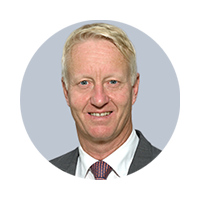 | Laurent Pellet Limited Partner & Global Head of EAM, Bank Lombard Odier & Co Ltd |
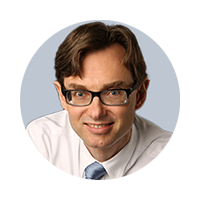 | Dr Maximilian Martin Global Head of Philanthropy, Bank Lombard Odier & Co Ltd |
Can you tell us more about the main issues and challenges facing philanthropists?
Worldwide, more than 2 billion people - a quarter of the world's population - live in vulnerable countries. Through the United Nations' 17 Sustainable Development Goals (SDGs) and other frameworks, the global community is committed to promoting development and helping those in need.
According to the OECD, official development assistance to support the countries of the Global South amounted to $185.9 billion in 2021. While this is a significant sum, it is nowhere near enough to achieve sustainable development. Even if these funds were allocated only to the poorest countries, development aid would barely exceed 90 dollars per person per year. And this deficit is likely to increase: in addition to the costs associated with the coronavirus pandemic, the issues of climate change and defence will continue to weigh on public finances in the short and medium term.
What are the best solutions for achieving your philanthropic aspirations?
Choosing the right philanthropic structure greatly increases the chances of achieving impact objectives, and can have significant legal, financial and operational consequences. An independent foundation often seems to be the most obvious choice in terms of proximity. However, the resulting lack of flexibility is leading more and more founders to turn to alternative donation structures. For example, it is possible to set up sheltered funds under the aegis of a tax-exempt charitable foundation, with an individual name and purpose of support.
The choice of structure is a deeply personal decision. In this context, in addition to all the technical issues, it is important to adopt a forward-looking approach and to bear in mind that visions can evolve and change.
What are the underlying motivations of philanthropists?
People commit to causes based on personal convictions. The way people give is influenced by their life story, their personal and professional background and their networks. However, we live in an age of rapid scientific progress, which demands the highest degree of transparency. Our knowledge is constantly expanding. We must take this into account in order to seize opportunities for impact.
According to UNICEF, only one child in four will live in a country where 70% of the sustainable development goals relating to children are achieved. We therefore need to explore new avenues, and philanthropy can provide an important impetus in this regard.
In practice, philanthropic engagement oscillates between two poles: strategic action and the interpretation of values. One promising way of increasing the impact of philanthropy, in addition to good support strategies, is to link all philanthropic capital to impact objectives.
In addition to choosing the right structure and taking into account the overall capital invested (distributions and foundation assets), how can we maximise social impact?
We can mention three elements:
- Focus on depth: limiting yourself to a certain number of projects allows you to concentrate on results and impact.
- Effectiveness of beneficiary organisations: by properly checking the effectiveness of potential beneficiary organisations, their financial viability, the quality of their governance and their responsiveness to changing needs, it is possible to give priority to those with the greatest impact.
- Evaluate and learn: strategic philanthropy is a great way to translate your values into action and impact. This requires perseverance: It involves examining successes and failures in order to learn from them.
Despite the current challenges, philanthropists are fortunately working in many areas for the common good. Changing contexts and unexpected events force us all to subject our strategies to an ongoing learning process and to adapt them as they are implemented. In the field of philanthropy, such an approach enables us to achieve the greatest possible impact, even with limited resources.
Biographies
Laurent Pellet joined Lombard Odier in June 2017. He assumed responsibility for the Group’s External Asset Managers department in 2018.
His career began with Ferrier Lullin, where he held various positions for more than 15 years, including Head of Credit and Risk, and subsequently Head of the External Asset Managers department in 1997. In 2006, he joined Julius Baer to lead their External Asset Managers business for the French-speaking part of Switzerland and Western Europe. In 2012, his responsibilities were extended to cover Monaco and the Middle East.
Laurent Pellet is a graduate in Credit and Risk Management and in Quantitative Portfolio Management from the University of Geneva. He also holds a Diploma in Digital Finance Law from the University of Geneva and the ‘International Certificate of Private Banking and Wealth Management Retreat’ from the Swiss Finance Institute. He is a Certified Wealth Management Advisor (CWMA).
Dr Maximilian Martin is the Global Head of Philanthropy at Lombard Odier Group.
He created Europe’s first university course on social entrepreneurship (2003) and designed and led the first philanthropic services and impact investing offering for a European bank (UBS, 2004-2009), also creating the UBS Philanthropy Forum. He wrote the Primer on impact investing “Status of the Social Impact Investing Market” (2013) for the G8 policy makers’ conference, which considered the potential and development options for this new branch of the financial industry for the first time.
Dr Martin holds an MA in anthropology from Indiana University, an MPA from Harvard University, and a Ph.D. in (economic) anthropology from the University of Hamburg. Previous employers and lecturing appointments have included McKinsey & Company, Schwab Foundation for Social Entrepeneurship, UBS, Harvard University, the University of Geneva and the University of St. Gallen. In 2016, Springer published his book “Building the Impact Economy: Our Future, Yea or Nay.”