The Family Office approach
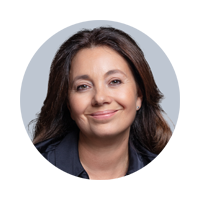 | Monica Espinosa Head of Family Office Solutions, UBP |
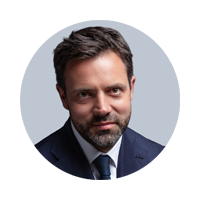 | Pierre Ricq Senior Family Advisor, UBP |
Why is the family office model now one of the best ways of managing wealth?
Pierre Ricq
Wealth management is more complex than just allocating assets. Families are dealing with financial, legal, tax, reputational and intergenerational matters, which need to be considered in the round, and the family office approach provides a co-ordinated, durable framework for that. At UBP, we start by looking at the family’s plans, to make sure that governance, wealth planning and investments are aligned.
What does taking “a family-centred approach” mean in practice?
Monica Espinosa
It starts with active listening. We seek to understand the family’s specific balance and relationship dynamics, along with its members’ expectations, which are sometimes unspoken. The aim is to align their priorities and values as far as possible in order to prevent tension and establish common ground on which we can build: what the family members agree on, what motivates them, and what needs to be preserved. We make sure that their agendas are cohesive, and that each person’s needs are heard, recognised and taken into account when decisions are made.
What process does UBP use when providing support to families?
Pierre Ricq
By using a three-step approach: understand, structure, orchestrate. To understand is to focus on the family as a whole—its DNA, values, and mission. To structure is to build clear governance, defining each person’s roles and responsibilities. To orchestrate is to translate the family’s objectives into investments, working hand in hand with internal and external experts, particularly wealth managers.
But there might be some resistance to putting a governance arrangement in place. How do you introduce one without upsetting people?
Monica Espinosa
We do it step by step, with tact and transparency. We start with a confidential questionnaire that invites each family member to think about fundamental governance aspects: the quality of communication, decision-making methods, present and future roles, family and personal challenges, and shared values. We then hold individual meetings, which allow less prominent voices to be heard: these help us to identify sensitive matters and collect the material we need to prepare a family workshop. The workshop is an opportunity for all family members to speak up, find common ground in terms of their expectations and work together to adopt suitable rules. The formal framework is not put in place until later, once trust has been established. A good governance arrangement is not a straightjacket: it’s a living thing that adapts as the family develops. It makes decision-making more fluid, clarifies roles and takes the emotion out of sensitive situations.
Once the framework is in place, there comes the question of wealth planning and its related professions. What roles do wealth planning and the co-ordination of expertise play?
Pierre Ricq
Wealth planning forms the backbone of the wealth strategy. It includes making plans for passing on assets, putting structures in place, taking into account tax and inheritance-related constraints, and ensuring that arrangements are consistent with the family’s aims. The family office approach does not just involve making technical plans, but also making sure that the plans deliver what the family really wants. However, you can have all the expertise in the world, but it will only provide a partial answer if it’s not interconnected. Our role is to orchestrate that expertise – legal, tax, real estate, philanthropy etc. – to serve the family’s vision.
How does the family office approach work with the wealth manager model?
Pierre Ricq:
A wealth manager can benefit from the additional services provided by a family office, which deal with aspects such as family governance, education for the family’s younger generations, wealth planning and clarification of the roles and dynamics that exist within the family. By delegating those aspects to a specialist partner, the asset manager can enhance their value proposition while remaining focused on what they do best, i.e. wealth management.
How do you make sure that decisions are grounded in reality and that expertise is integrated rather than siloed?
Monica Espinosa
We work together to develop roadmaps setting out the family’s objectives and priorities, as well as the people with responsibilities and the timeframes involved. Decisions are taken in the right forums, with the right people, at the right time. And we work hard to be transparent about why decisions are being made, what difference they will make and how their effects will be measured. This constant connection between technical aspects and real-world effects ensures buy-in and allows us to move forward.
What are the pivotal moments in which your holistic approach proves its value?
Pierre Ricq
There are a number of examples of when our approach is particularly useful: a liquidity event, an inheritance, a business disposal or a change in the family’s composition. These events often require a number of decisions to be taken. The family needs to make choices, prioritise, think long-term. A robust framework avoids inconsistencies, provides a step-by-step way forward and ensures clarity.
These events are also opportunities to get younger generations involved and increase family cohesion.
How do you engage with younger generations without giving them too much responsibility too soon?
Monica Espinosa
We get them involved gradually. Our method is a combination of education, observation and input. Philanthropy is a natural way to engage with younger generations: it gives them a shared meaning and prepares them to take on responsibility. Younger generations want to understand, learn and take part. They are often well informed and keenly aware of impact issues, and they want to be regarded as active participants, not just heirs.
How do you see the role of the family office developing in future?
Monica Espinosa
It will include more personal support. Families want insight, not just solutions. To provide that insight, we sometimes need to deal with sensitive matters, and that’s when a willingness to listen, a professional manner and high-quality relationships become just as important as technical expertise.
Biographies
Monica Espinosa is a financial services executive with over 20 years of experience in banking, wealth management, and family office advisory. As the Head of Family Office Solutions at Union Bancaire Privée (UBP), Monica is dedicated to helping families navigate the complexities of wealth preservation, governance, and legacy planning. Monica has held several key leadership roles, including managing the External Asset Manager (EAM) market for Switzerland and international clients, as well as driving impactful Change Management initiatives into the Bank with Mc Kinsey Consultants. Prior to UBP, she led the External Asset Managers service for Switzerland at HSBC Private Bank. Monica’s career began at Citigroup Private Bank, where she managed high-value relationships in the Spanish market. Additionally, Monica is an Executive Coach. She graduated from the University of Geneva.
Pierre Ricq is a financial services professional with over 20 years of experience in asset and wealth management, having held leadership roles at institutions such as UBS, Vontobel, and J. Safra Sarasin. As Senior Family Advisor within the Family Office Solutions department at Union Bancaire Privée (UBP), Pierre is dedicated to guiding families through the complexities of wealth management, governance, and legacy planning. He is also the Director of the Family Officer Certificate, a program he founded in 2024 at the Institut Supérieur de Formation Bancaire (ISFB), designed to equip family members and practitioners with the skills needed to navigate the evolving family office landscape. Pierre holds a degree in Business Economics from the School of Business Administration in Geneva (HEG). He has also completed an executive program at INSEAD.